
Nervous system regulation is the capacity to respond to stress and return toward a workable level of alertness, not a promise to feel calm all the time. For people who feel persistently tense, overwhelmed, or shut down, the most useful starting point is to notice what state they are in, then choose a small, safe response. Emotional balance grows through repeated practice and changing the conditions that keep stress going.
Key points for building emotional balance
- Regulation means flexibility, not staying relaxed or avoiding difficult emotions.
- Stress responses vary, and common signs are not diagnoses by themselves.
- Grounding, gentle movement, supportive connection, and comfortable breathing are possible tools, not universal fixes.
- Practice in small doses and adjust if an exercise increases distress.
- Persistent or disruptive symptoms may call for professional support and practical changes in your environment.
Regulation means flexibility, not a permanent state of calm
The autonomic nervous system helps manage functions such as heart rate and breathing, while responding to changes inside and around us. Its sympathetic and parasympathetic branches work together; they are not simply an on-off switch between danger and safety. A regulated person can become alert when a challenge calls for it and settle again when the demand passes.
That is why emotional balance does not mean suppressing anger, fear, grief, or excitement. It means noticing an emotional signal, making room to understand it, and choosing what to do instead of reacting automatically. This distinction is explored further in the guide to self-regulation and self-control.
Stress can change breathing, heart rate, muscle tension, and attention. The National Center for Complementary and Integrative Health explains that relaxation practices can elicit a response involving slower breathing and heart rate. That does not mean a single exercise can erase the source of distress or treat every health condition.
Stress activation and shutdown can look different
Stress does not look the same in everyone. One person may feel restless, irritable, and watchful; another may feel tired, numb, withdrawn, or unable to think clearly. Changes in sleep, appetite, concentration, or digestion can have many causes, so these experiences alone do not prove that someone has a “dysregulated nervous system.”
Instead of labeling yourself, track the pattern: What happened before the shift? What did you notice in your body? What helped you recover, even slightly? Somatic tracking can help you observe bodily signals without treating every sensation as a threat or a diagnosis.
Choose a regulation practice that feels manageable
Start with a low-pressure cue that fits your state. The aim is not to force calm, but to give your attention and body a chance to orient to the present. Try one option for a short time, then check whether it feels neutral, helpful, or uncomfortable.
- Orient to the room. Slowly name a few things you see, hear, and feel beneath your hands or feet.
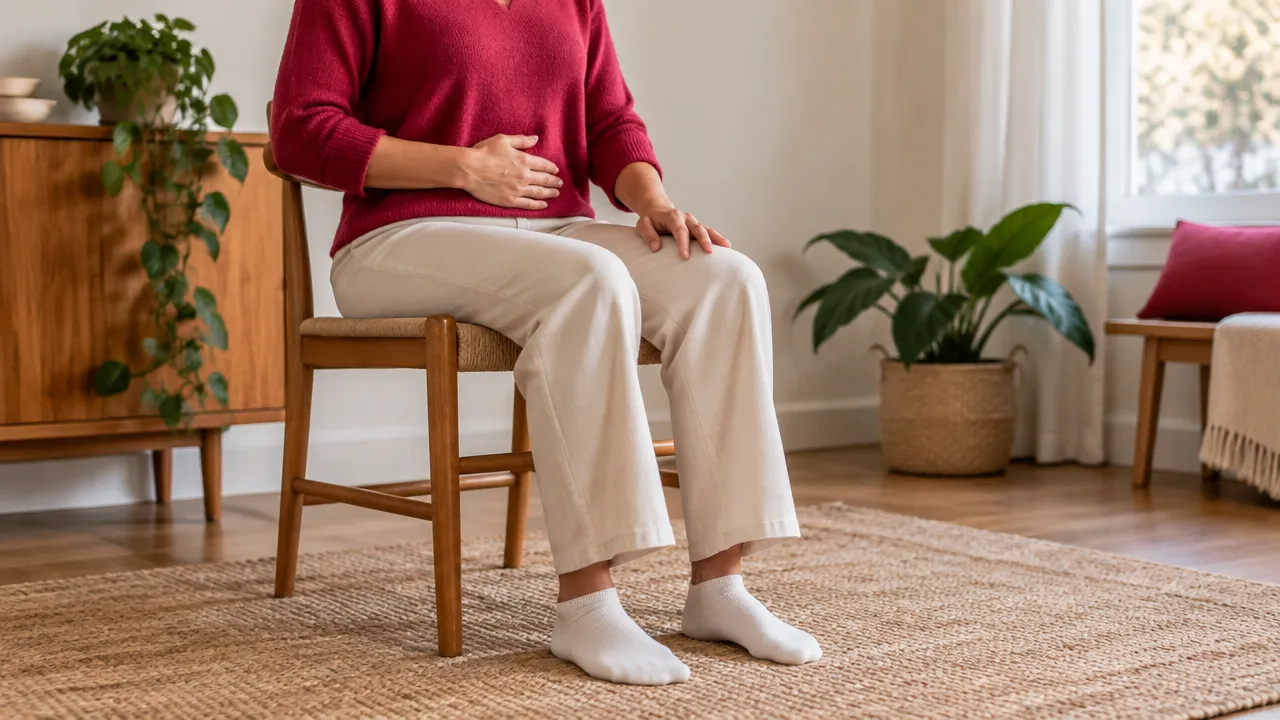
- Try comfortable breathing. Let the breath be easy and unforced. If it feels comfortable, allow the exhale to be slightly longer than the inhale. Stop if you feel dizzy or more distressed.
- Move gently. Walk, stretch, or shift your posture. Choose movement that suits your body and current energy.
- Reach for connection. A steady conversation or being with someone you trust may feel more supportive than practicing alone.
In an NCCIH summary, a 2019 review of three studies involving 880 participants found preliminary evidence that diaphragmatic breathing may help reduce stress. “Preliminary” matters: results do not guarantee that a technique will work for every person or situation. A broader review of breathing practices for stress also discusses variation in study methods and outcomes. For a practical introduction to noticing body cues, see embodied awareness techniques.
Build a routine that supports change beyond the moment
A brief exercise may help with an immediate wave of stress, but emotional balance also depends on what happens across the day. If pressure keeps returning, look at sleep, workload, conflict, isolation, health concerns, and whether you have enough time to recover. A calming practice cannot compensate indefinitely for an unsustainable situation.
Choose one repeatable moment, such as pausing after work or grounding before a difficult conversation. Afterward, note what you tried and whether it helped, made no difference, or felt worse. This turns practice into useful information rather than a pass-or-fail test. A sustainable approach to behavior change values small adjustments and realistic repetition.
Burnout is not simply a nervous-system problem that can be solved with breathwork. When exhaustion is linked to ongoing demands, consider what can change in the demands themselves, including boundaries, workload, support, and rest. Regulation skills may help you respond, but they should not shift responsibility for an unhealthy situation onto you alone.
Get support when symptoms persist or interfere with life
Self-guided practices are not a substitute for medical or mental health care. Talk with a qualified professional if distress persists, worsens, disrupts relationships or daily responsibilities, or feels difficult to manage. Seek medical assessment for new or concerning physical symptoms, since stress is only one possible explanation.
When choosing a practice, respect your own response. If breath focus, stillness, or body awareness intensifies discomfort, stop and try an external grounding cue or seek guidance. The NCCIH overview of relaxation techniques advises against using them to replace conventional care or delay a medical visit.
Frequently asked questions
Can you reset a dysregulated nervous system?
You cannot literally reset your nervous system with one technique. You can support its return toward a steadier state by noticing signs of stress, reducing immediate demands where possible, and using a response that feels manageable, such as grounding, gentle movement, or an easy-paced breath. Repetition matters more than a dramatic quick fix.
How can I feel safer in my body when stressed?
Begin with what is happening now rather than forcing yourself to feel calm. Notice your feet on the floor, name a few things you see, or move to a place that feels more manageable. If focusing on breath increases distress, stop and try another cue. A trusted person's calm presence may also help.
What is the relationship between burnout and nervous system dysregulation?
Burnout can involve persistent exhaustion and difficulty recovering from ongoing demands, but it is not simply another name for nervous system dysregulation. Breathing or grounding may help in the moment, yet lasting improvement may also require addressing workload, boundaries, rest, and support. Persistent symptoms deserve attention beyond self-help techniques.
How long does it take to regulate your nervous system?
There is no universal timeline. A brief practice may help some people feel more settled in the moment, while lasting changes depend on circumstances, health, safety, and repeated experience. If distress continues or affects daily life, consider support from a qualified health professional rather than treating progress as a test of willpower.
When should I seek professional help?
Seek help from a qualified health professional when distress is persistent, worsening, disrupting daily life, or difficult to manage alone. New or concerning physical symptoms also deserve medical assessment. Self-regulation practices can complement care, but they should not replace evaluation or treatment for a health condition.